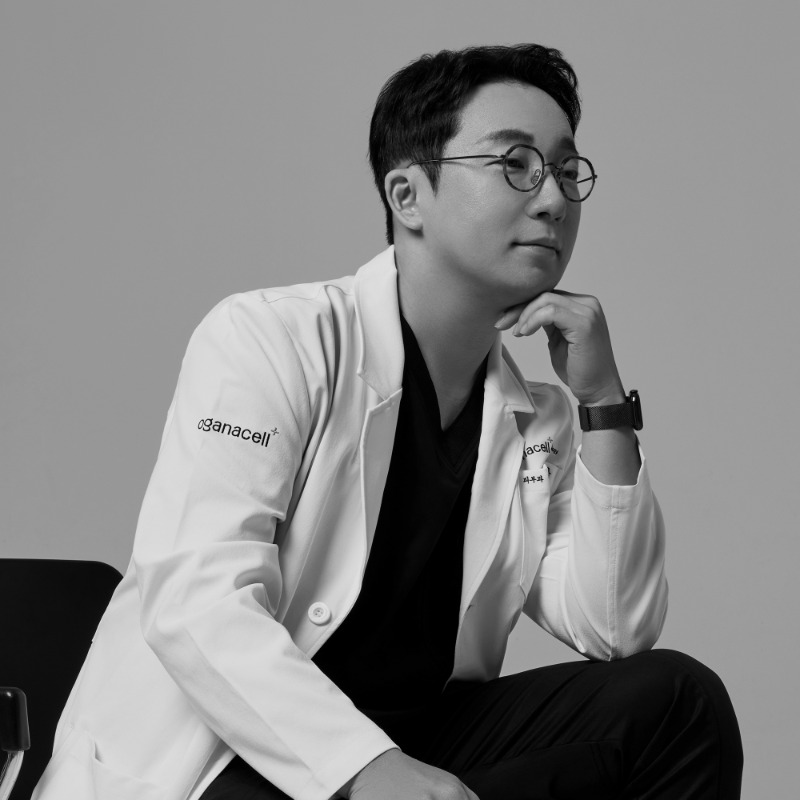
The "Gangnam Glow" is neither a specific laser brand name nor a social media filter effect. The luminous, clear complexion often seen on celebrities in Cheongdam-dong reflects a state where melanin distribution, skin texture and hydration, dermal density, and rosacea are all brought into alignment. Oganacell Dermatology Clinic does not lead with trendy brightening menus. We first distinguish whether dullness originates from pigmentation, skin texture, or barrier damage and dryness — and only then layer whitening care, pigmentation treatment, Oganacell Booster, and Fluid Injection Therapy where each is actually needed.
Glass skin is a powerful search term. Yet that luminosity appears not from a single toning session, but when the conditions are in place for light to reflect evenly off the skin's surface.
Before selecting a treatment, the question is straightforward: Is the dullness you see coming from melanin, rosacea, dryness and dead skin cells, or shadows created by enlarged pores and loss of elasticity? When the answer involves more than one factor, the protocol is structured accordingly — layer by layer.
Why the "Gangnam Glow" Is Never Just One Treatment
In search results, "glass skin" and "Gangnam glow" are often grouped together. Dermatologically speaking, the result reflects the simultaneous refinement of the epidermis, dermis, and vasculature. When epidermal melanin is evenly distributed, localized shadows diminish. When the stratum corneum is not overly thickened and hydration is adequate, light reflects smoothly rather than scattering unevenly. When dermal collagen maintains its density, volume is preserved and shadowing becomes less pronounced. When vascular dilation is minimal, redness does not muddy the underlying skin tone.
When searching for Korean dermatology clinics from abroad, device names tend to appear first. Yet what ultimately differentiates outcomes — even among patients receiving the same pigmentation treatment — is diagnosis, not the marketing language around pulse settings. UV-induced melasma, post-inflammatory hyperpigmentation following acne, recurrent rosacea in sensitive skin, fine shadows around pores, and dryness from frequent travel or inadequate sleep may look similar on the surface but each calls for a different approach. Applying intense stimulation with a single device across mixed causes may produce immediate brightening, yet it can compromise the skin barrier — and melasma in particular is sensitive to heat and inflammation.
This is why Oganacell Dermatology Clinic, while specializing in lifting and anti-aging, does not reduce brightening to a single device or protocol. Luminosity is not solely a matter of pigment. When skin laxity is present, even the same level of pigmentation can cast deeper shadows; when mild edema exists, overall tone can appear dull or grayish. Matching treatment selection to the skin's condition and underlying cause reduces unnecessary burden — and when comparable outcomes can be expected, the safer option with shorter recovery is the more reasonable choice.
A higher-cost treatment is not inherently a better one. In brightening as in any area of dermatology, results are more durable when only the layers that truly need addressing are treated.
Why We Categorize Skin Dullness Into Four Distinct Types
The Chief Director and medical team at Oganacell Dermatology Clinic evaluate skin tone by more than just depth of color. They assess melanin depth, the extent of rosacea, barrier stability, pore condition and skin texture, as well as recent sun exposure and travel schedules — all within a single consultation. Interpreters fluent in Chinese, English, and Japanese are available at the Cheongdam-dong clinic, so international patients can communicate their concerns and scheduling constraints without difficulty. All consultations and treatments are preceded by a direct assessment from a Board-Certified Dermatologist.
| Visible Appearance | Common Cause | Primary Approach |
|---|---|---|
| Yellowish dullness, uneven patches | Epidermal and dermal melanin | Pigmentation / Melasma treatment, brightening care |
| Grayish tone with underlying redness | Overlapping vascular dilation and pigmentation | Rosacea stabilization followed by tone correction |
| Makeup sits poorly, rough texture | Compromised barrier, dehydration | Soothing care, moisture restoration |
| Shadowing, prominent pores | Changes in texture, elasticity, and volume | Pore / Blackhead care, Elasticity Revision |
When Melanin Is the Primary Cause
Melasma, dark spots, and post-inflammatory hyperpigmentation are all traces left by overactive melanocytes. Because pigment depth and distribution vary, the appropriate energy level and number of sessions differ even within the same brightening treatment. Superficial spots tend to respond more readily, while melasma that extends into the dermis is more sensitive to heat and stimulation. In Pigmentation / Melasma treatment, laser toning is one method used to selectively deliver energy to melanin particles. Ultra-short picosecond pulses help fragment pigment while minimizing thermal burden on surrounding tissue. Not every form of dullness calls for the same energy settings — for skin with melasma, the priority is avoiding inflammation rather than simply increasing intensity.
When Rosacea and Pigmentation Overlap
Repeatedly applying brightening treatments to skin that still has underlying redness can leave the complexion looking grayish. The true depth of pigmentation in rosacea-mixed dullness only becomes apparent after the vascular response has calmed. For Sensitive Skin, the barrier is stabilized through soothing care first, and whether to incorporate rosacea treatment is determined during the clinical assessment. Condensing high-stimulation procedures into a short stay can cause redness to flare again during the return flight.
When a Compromised Barrier and Dehydration Scatter Light
When the skin surface becomes rough and moisture is depleted, even fine irregularities can scatter light and make the complexion appear dull and lackluster — regardless of melanin levels. Applying aggressive pigmentation treatments in this state may temporarily clear surface flaking and create the appearance of brightness, but it can further thin the barrier over time. This is why soothing care and moisture restoration are prioritized as the first step.
When Texture, Pores, and Elasticity Create Shadowing
Shadows cast by enlarged pore openings, fine lines, and mild sagging can make the face look dull without any change in actual skin color. Pore / Blackhead care helps reduce pore congestion, and when elasticity has diminished, Elasticity Revision becomes part of the overall tone correction plan. Options such as UltraClear, which directly addresses skin texture, may be considered when surface irregularities are pronounced — though downtime and travel schedules are factored in together. For patients with immediate plans during their stay, lengthier recovery procedures are not recommended.
A Cause-Targeted Brightening Layer Protocol for Korean Skin
Oganacell's comprehensive protocol is not a package that simply lists trending procedures. Each layer is added only based on what is identified during consultation. Having more than 40 types of authentic premium devices and high-grade pharmaceutical agents is not about starting with the most aggressive combination — it is about selecting the appropriate intensity for each underlying cause.
Epidermal Tone — Brightening Care and Pigmentation Treatment
Brightening care is the process of regulating melanin synthesis and the clearance of existing pigmentation in accordance with each patient's skin condition. Laser toning is one tool within that process, and without proper home care and sun protection, its effects tend to be short-lived. For skin with melasma, avoiding excessive heat and erythema immediately after treatment tends to produce more stable long-term outcomes. Aiming to eliminate both dark spots and melasma in a single session places considerable stress on the skin. We prioritize visible lesions and schedule treatments with adequate intervals to prevent overlapping irritation.
Dermal Condition — Oganacell Booster and Stem Cell
Luminosity does not come from resurfacing the epidermis alone. The dermis must retain sufficient moisture and the extracellular matrix must be firm for light to reflect smoothly from the surface rather than stopping short of it. The Oganacell Booster is considered when dryness and loss of vitality in skin texture need to be addressed at the dermal level. If laser toning manages the pigment particles, the Booster is closer to preparing the foundation where light can reside evenly.
Oganacell Stem Cell is not an immediate brightening treatment. It is a signature line designed to refine tissue quality over the medium term, and it is most meaningful for skin where recurring inflammation or reduced elasticity is suppressing overall tone. For patients with a short stay who can only visit once, expectations are aligned around changes in skin texture over the weeks following their return home, rather than changes observed on the day of treatment. It is best understood not as a replacement for laser treatments, but as a stabilizing layer that supports the foundation laser work leaves behind.
Systemic Condition — Fluid Injection Therapy
Jet lag, sleep deprivation, and dry cabin air can leave the complexion looking dull and gray. Fluid Injection Therapy does not replace pigmentation laser treatment. However, when circulation and overall condition are compromised and only localized procedures are repeated, the skin may appear brighter while the overall impression still looks fatigued. For international patients, Fluid Injection Therapy is incorporated as a supportive layer to help optimize condition before and after treatment. When facial volume management is relevant to the travel schedule, we also consider whether excess facial volume may be obscuring skin tone.
Elasticity as a Reflective Surface
When the cheeks and jawline begin to descend, even an even skin tone can fall into shadow. The reason we do not lead brightening consultations with the names of lifting devices is that there is no indication for adding energy-based treatments when elasticity loss has not been confirmed. Elasticity care, Thermage FLX, and Ulthera Prime are considered only when sagging is identified as the primary cause of shadowing. Light reflects evenly from a taut surface. If the skin's structure has deteriorated while pigmentation alone has been addressed, achieving the appearance of glass skin remains difficult.
A Layer That Continues Beyond the Clinic — Home Care
Half of the results from treatments received in Korea are determined by how well ultraviolet exposure and irritation are managed after returning home. Aggressive exfoliation, high-concentration acid products, and sauna use immediately after toning can re-stimulate pigmentation. Before the skin barrier has recovered, moisturization and sun protection come first. It is safer to follow the home care routine provided after treatment in the sequence advised, and to avoid adding new brightening products on your own. An all-in-one total care approach is considered when multiple layers of the skin are disrupted simultaneously and must be addressed within a single-day schedule; it is not a uniform protocol applied to every patient.
Prioritizing Treatments for a Short Stay
Many patients from Japan, English-speaking countries, and Chinese-speaking regions who visit through the Ogana Global channel have limited time in Korea. Under these circumstances, the focus is not on fitting in as many procedures as possible, but on ensuring that flight readiness and post-return care are built into the treatment plan from the start.
During the initial consultation, we assess the relative contribution of pigmentation, rosacea, barrier dysfunction, and skin texture. With an interpreter present throughout, patients can accurately convey their current skincare routine and any previous responses to laser treatments.
2. Begin with Treatments That Fit Within Your ScheduleBrightening care, low-stimulation pigmentation treatments, Oganacell Booster, and Fluid Injection Therapy generally allow for a relatively quick return to daily activities. Options such as UltraClear, which address deeper skin texture concerns, are recommended only when the recovery period does not conflict with travel plans.
3. Consider In-Flight Conditions and Sun ExposureCabin dryness and UV exposure are common factors that can reactivate pigmentation after treatment. We adjust the treatment sequence to avoid high-energy procedures immediately before departure or prolonged outdoor activity on the day of treatment.
4. Follow-Up After Returning HomeFor patients on short stays, the main concern is often not the procedure itself, but knowing where to turn if questions arise after returning home. Oganacell provides post-treatment instructions and homecare guidance in each patient's language, and offers a channel to share follow-up photos and symptoms with the medical team. Please refer to the contact information on this page for details.
One reason VIP clients and Korean celebrities seek out Cheongdam-dong is a preference for subtle, natural-looking results. The Gangnam glow is less about visible radiance and more about restoring the skin's own clarity through measured, cause-specific correction. Rather than combining the latest trending procedures into a single session, the more reliable approach — both during and after your visit — is to selectively address only what is currently dulling the skin's natural tone.
Frequently Asked Questions
Can laser toning alone give me glass skin?
When excess melanin is the primary concern, pigmentation treatment forms the foundation of care. However, if dryness, rosacea, enlarged pores, or loss of elasticity are also present, toning alone may not produce an even, luminous complexion. Starting with the most significant underlying cause identified during consultation tends to minimize irritation while delivering a more natural-looking result.
Is brightening treatment possible if I only have a day or two while traveling?
It depends on your skin condition and remaining schedule. Options with minimal downtime — such as whitening care, low-intensity pigmentation treatment, Oganacell Booster, and Fluid Injection Therapy — are well suited to short stays. Treatments requiring longer recovery are best planned for a visit when your schedule allows more flexibility. If you have a same-day flight, procedures that generate significant heat will be deferred to a later appointment.
Should I delay brightening treatments if I have melasma?
Having melasma does not mean all brightening treatments need to be avoided. That said, combining high energy settings with aggressive peeling can worsen post-inflammatory hyperpigmentation. Our medical team at Oganacell Dermatology Clinic assesses the depth of your melasma and recent sun exposure before adjusting toning intensity and incorporating appropriate soothing care into your treatment plan.
Can Oganacell Booster or Stem Cell treatments replace brightening laser?
These are complementary, not interchangeable. Laser toning addresses melanin particles directly, while Oganacell Booster targets hydration and skin texture, and Oganacell Stem Cell works to improve tissue quality over the medium term. Relying solely on the Booster when pigmentation is prominent, or repeating laser treatments on a compromised skin barrier without additional support, may not adequately address the underlying causes.
How do I maintain results after returning home?
Continue the moisturizing and sun protection routine outlined at discharge, and avoid introducing new brightening products or strong exfoliants without consulting our team first. If redness persists or pigmentation appears to deepen, share progress photos with us so we can advise on the next steps. Even for shorter stays, we plan your treatment schedule with multilingual aftercare guidance and remote follow-up in mind, so continuity of care is maintained after you leave.